

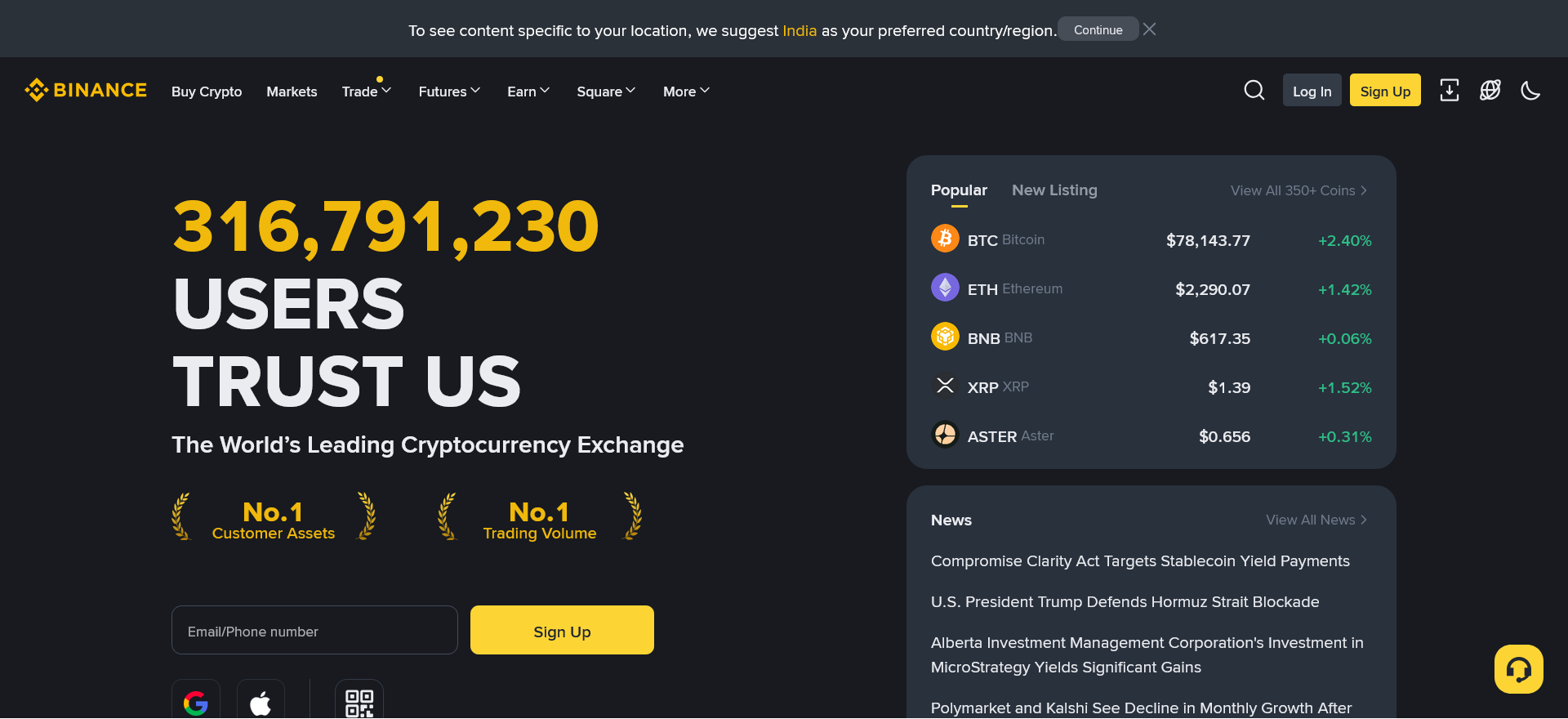
I signed up, deposited real money, placed real trades, tested the new AI tool, tried to withdraw, and hit every wall a new user hits. This is what I found — including the parts Binance probably wishes I hadn’t.
Let me be upfront about something before we start. Most Binance “reviews” online are written by people who have never actually opened the platform. They copy fee tables from other articles, recycle the same bullet points about “500+ coins,” and call it a day. I wanted to do something different.
Over the past 90 days, I created a fresh Binance account, went through the full KYC verification process, deposited funds using both P2P (INR) and crypto transfer, placed spot trades, tested Copy Trading, experimented with Simple Earn, tried the newly launched Binance AI Pro beta, and yes — attempted to withdraw back to my bank. I documented every step, every friction point, and every thing that actually impressed me.
This is that article. It is long because using Binance is not simple — and anyone who tells you otherwise either hasn’t used it seriously or is trying to sell you something.
What Is Binance — The Honest Background
Binance launched in July 2017. Within six months it was already the largest cryptocurrency exchange on earth by trading volume — a growth trajectory that has never been matched in financial services history. It was founded by Changpeng Zhao, known universally as CZ, and Yi He. CZ had previously worked at Bloomberg and Blockchain.com. Yi He had co-founded OKEx.
The company grew explosively, deliberately keeping itself fluid — no fixed headquarters, servers distributed globally, structured in ways that made regulatory jurisdiction murky. This worked brilliantly for expansion and disastrously when regulators caught up. In November 2023, CZ pleaded guilty to US anti-money laundering charges and agreed to a $4.3 billion settlement — the largest financial penalty in US history at the time. He was replaced by Richard Teng, a Singaporean regulator and former head of the Abu Dhabi Global Market.
Here is what matters for you as a potential user: that leadership change triggered a genuine, measurable compliance overhaul. Binance’s exposure to illicit funds dropped 96% between 2023 and 2025. The platform secured full regulatory authorisation from the Abu Dhabi Global Market in December 2025 — the first global crypto exchange to do so. In early 2026, Abu Dhabi’s state-linked AI investment firm MGX injected $2 billion into Binance, paid entirely in stablecoins. That is not the financial profile of a platform operating in the shadows.
As of May 2026, Binance serves 300 million registered users in 100+ countries, trades approximately $217 billion daily across spot and futures markets, and commands roughly 40% of the global centralised exchange market. No competitor is remotely close on any of those metrics.
My Signup Experience: Registration & KYC Step by Step
I created my account on the Binance website. The registration itself took about three minutes — email address, strong password, email confirmation code. Standard stuff. The interesting part started immediately after, because Binance now requires KYC (identity verification) before you can do virtually anything, including trading or depositing crypto.
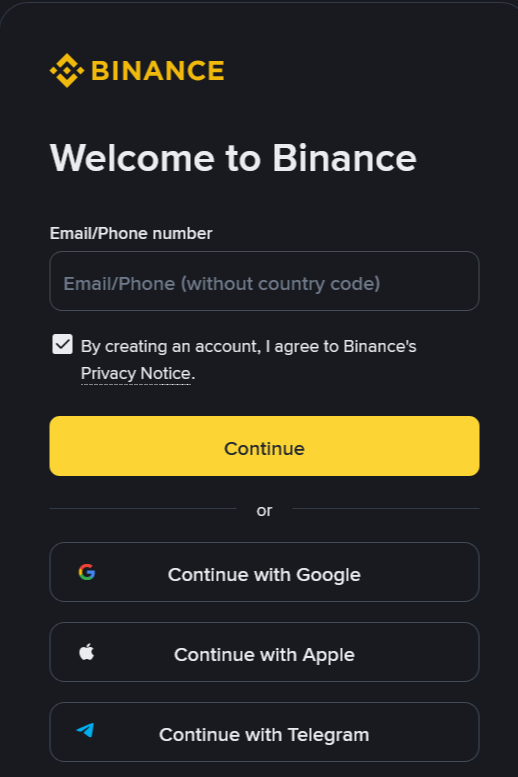
KYC on Binance has three levels. Basic verification gets you limited access. The “Verified” level unlocks trading, deposits, and withdrawals up to $50,000 daily. “Verified Plus” raises that to $2 million daily and is what most serious users will want. I went straight for Verified.
What I submitted:
- Full name (must match your government ID exactly — I double-checked this)
- Date of birth
- Residential address
- Country of residence
- Front and back photos of my Aadhaar card
- A live selfie video (Binance calls this a “liveness check” — you follow prompts on screen, turn your head, blink)
One thing I want to flag: when they say your name must match your ID exactly, they mean it. I have a middle name I sometimes omit from forms. I entered my name without it. The system caught the discrepancy and I had to resubmit. It added about 20 minutes. Enter your name exactly as it appears on your passport or Aadhaar card, middle name included.
The liveness check was the most modern part of the process. No awkward selfie-with-ID-held-up — just a video where the AI confirmed I was a real person. I did it in decent room lighting on my phone and it passed on the first attempt. Make sure you remove glasses and face the camera in good light. Poor lighting is the most common rejection reason.
My verification was approved in approximately 2 hours. The platform says it can take up to 48 hours during peak periods. I received an email confirmation once it was done, and my dashboard switched from “verification pending” to “Verified” status.
| KYC Level | What You Submit | Daily Withdrawal Limit | Features Unlocked |
|---|---|---|---|
| Unverified | Nothing | $0 | View only — no trading |
| Verified | Government ID + liveness check | Up to $50,000/day | Spot trading, deposits, withdrawals, P2P, Earn |
| Verified Plus | Verified + proof of address | Up to $2,000,000/day | All features, higher limits, advanced products |
My KYC tips after going through it: Do it on your phone, not a laptop. The phone camera is better, the face scan works more reliably on mobile, and the whole process is designed for the app. Have your ID physically in your hand before you start — do not try to photograph a photo of your ID from another screen. Make sure every corner of the document is visible in the frame.
3. My First Deposit: How I Got INR Into Binance via P2P
This is where things get genuinely interesting for Indian users, and also where most guides fail to be useful. Binance does not support direct INR bank deposits. You cannot connect your bank account and transfer rupees directly. Instead, the primary route is Binance P2P — a peer-to-peer marketplace where you buy USDT from another real user and pay them in INR via UPI or bank transfer.
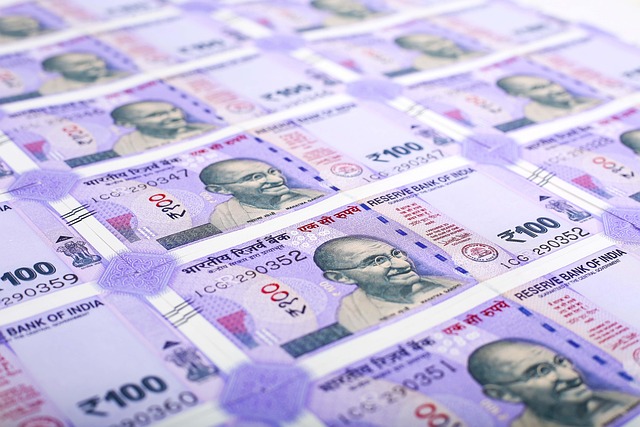
I was skeptical of this initially. It sounded complicated and potentially risky. After actually using it, I think it is well-designed — but it does require attention on your first attempt.
Here is exactly what I did:
- Opened the Binance app, tapped “Buy Crypto,” selected “P2P Trading”
- Selected USDT as the asset I wanted to buy, and INR as the currency
- Filtered sellers by payment method — I selected UPI
- Sorted by “Completion Rate” — I only looked at sellers with 98% or above and 500+ completed orders
- Selected a verified merchant (yellow badge next to their name) offering close to the market rate
- Entered my purchase amount in INR
- Received the seller’s UPI ID directly in the chat window within the app
- Transferred INR via my bank’s UPI app — a regular payment to their UPI handle
- Clicked “Transferred, Notify Seller” inside Binance
- The seller confirmed receipt and released the USDT into my Binance spot wallet within about 4 minutes
The total time from starting the process to having USDT in my wallet was approximately 12 minutes. The exchange rate I got was about 1.2% above the live market rate — this is the typical “P2P premium” you pay for the convenience of an INR on-ramp. This is normal and expected.
The most important rule of P2P that I learned: Never release crypto before confirming the payment has actually landed in your bank account. Binance holds the seller’s USDT in escrow, and the seller should not release it to you until they see the money. As a buyer, make sure the UPI transfer confirmation shows the payment going to the same name as the P2P seller’s listed name. If they do not match, abort the trade and open a dispute.
I deposited the equivalent of ₹10,000 to start. No issues. The USDT appeared in my spot wallet immediately after the seller released it.
| Deposit Method | Supported for India? | Typical Fee | Speed |
|---|---|---|---|
| P2P (UPI) | Yes — primary method | ~1–2% P2P premium | 5–15 minutes |
| P2P (IMPS/NEFT) | Yes | ~1–2% P2P premium | 15–30 minutes |
| Direct bank transfer (INR) | No — not supported | N/A | N/A |
| Credit/Debit card | Yes (limited) | 2% | Instant |
| Crypto transfer (from another wallet) | Yes | Network fee only | 1–30 minutes (network dependent) |
Navigating the Platform: Honest Thoughts on the UI
I want to be direct here: the Binance interface is overwhelming for a new user. There is no other word for it. The homepage on both app and web is dense with numbers, tabs, product banners, market tickers, and promotional widgets. Within the app alone there are tabs for Markets, Trade, Earn, Square, Wallet, and more — each containing multiple sub-sections that go several layers deep.

The good news is that Binance offers a “Lite Mode” for the app which strips the interface down to a clean, simple screen for buying and selling. I used it for my first two weeks and genuinely appreciated it. If you are new, start there. You can always switch to Pro Mode as you get comfortable.
The web platform is where serious traders operate. The trading terminal with TradingView charts, order book depth, and all order types — market, limit, stop-limit, OCO — is excellent. After a few days of using it, the layout becomes logical. The learning curve is real but not punishing if you have used any financial platform before.
The search bar is your friend. If you cannot find a feature, just type it. “Earn,” “P2P,” “AI Pro,” “Copy Trading” — the search surfaces the right section instantly rather than you hunting through menus.
I Placed My First Trade — Here Is What Happened
After depositing my USDT via P2P, I placed my first spot trade. I bought ETH/USDT at market price. The execution was instant — genuinely, the order filled before I had even processed that I had clicked confirm. That is the practical benefit of Binance’s liquidity depth. At $217 billion in daily volume, there is almost always a counterparty ready at the price you want.
My first trade: 20 USDT worth of ETH, market order, at approximately the price I saw on the chart. The fill was at exactly the displayed price — no slippage I could detect on a small order. The fee was 0.10% of the trade value, deducted automatically from my received ETH.
I later tested a limit order — setting a price below the market and waiting for it to be hit. It worked exactly as it should, and my order sat in the “Open Orders” section with full visibility until execution. The order book depth display is clear enough to understand roughly where large buy/sell walls are sitting.
One thing I appreciated: the order confirmation screen shows you the estimated fee before you confirm. Nothing is hidden. You see exactly what you are paying and what you will receive before the trade executes. This sounds obvious, but several competing platforms obscure fees until after execution.
I Tried Copy Trading for 3 Weeks
Binance Copy Trading lets you automatically mirror the live trades of verified Lead Traders. I was curious whether this was actually useful or just a feature that sounds good on paper.
I allocated 50 USDT to Copy Trading and selected a Lead Trader with a 90-day return of +18%, a maximum drawdown of 12%, and over 3,000 active copiers — indicating the community had vetted them. I set a stop-loss at -15% on my allocated amount so I would not lose more than ₹1,000 if things went badly.
Over three weeks, my 50 USDT allocation moved to about 54 USDT — a 8% return over 21 days. This outpaced what I would have earned in Simple Earn flexible savings, but it came with more volatility. There were three days where my position was briefly negative before recovering.
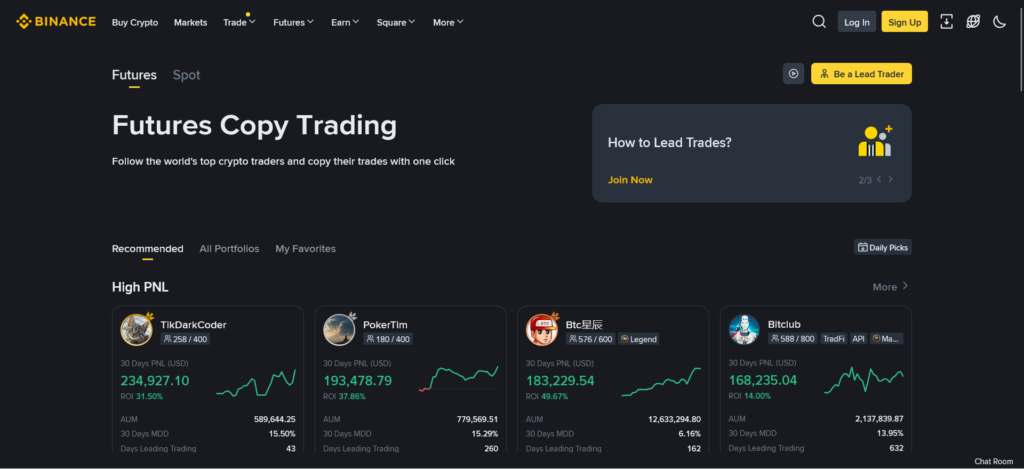
The transparency of the Copy Trading system impressed me. I could see every trade the Lead Trader was making in real time, the entry and exit prices, the P&L on each position, and the overall performance history going back months. I could stop copying at any time with one tap and my positions would be automatically closed or maintained as I chose.
My honest assessment: Copy Trading is genuinely useful for users who want market exposure without doing their own analysis. But it is not passive income — you are still exposed to market risk, the Lead Trader’s strategy, and the overall crypto market direction. Do not allocate more than you are comfortable watching drop 15–20% temporarily.
Binance Earn: I Locked My USDT and Earned Passive Income
After my Copy Trading experiment, I moved half of my USDT into Binance Simple Earn. I tried both the Flexible option (earn interest, withdraw any time) and a 30-day Locked option (higher interest, funds committed for 30 days).
The Flexible USDT yield at the time of my test was approximately 3–4% APY. The 30-day Locked subscription offered around 7–8% APY. These rates fluctuate constantly based on market demand — they are not fixed. I locked 30 USDT for 30 days and received my interest daily, which was credited automatically to my spot wallet each morning.
The process was three taps: Earn → Simple Earn → Select USDT → Subscribe. My locked USDT disappeared from my “available” balance and appeared under the Earn tab. Every morning I could see the interest accrual. At day 30, everything unlocked automatically and returned to my spot wallet.
Binance distributed $1.2 billion in Earn rewards to users across all products in 2025. That is a real number backed by their year-end report. The products work as advertised, but the rates you see are not guaranteed — they are estimates based on current demand. If you are used to fixed-rate bank FDs, the variable rate nature takes some getting used to.
I Tested Binance AI Pro Beta — The Most Interesting New Feature of 2026
This is the feature I was most curious about going into this review. Binance AI Pro launched in public beta on March 25, 2026. It is an AI-powered trading tool built on the OpenClaw ecosystem, powered by multiple AI engines including ChatGPT, Claude, Qwen, MiniMax, and Kimi. Yes — the same Claude model that helps me with other research tasks is one of the AI engines powering Binance AI Pro’s analysis.
Getting access was straightforward. I saw the “Binance AI” entry point in the top navigation bar on the website. Clicked it, read the terms, confirmed activation. The system automatically created a dedicated virtual sub-account, completely isolated from my main account — its own balance, its own API key, with no withdrawal permissions (meaning the AI cannot move money out of Binance, only trade within it).
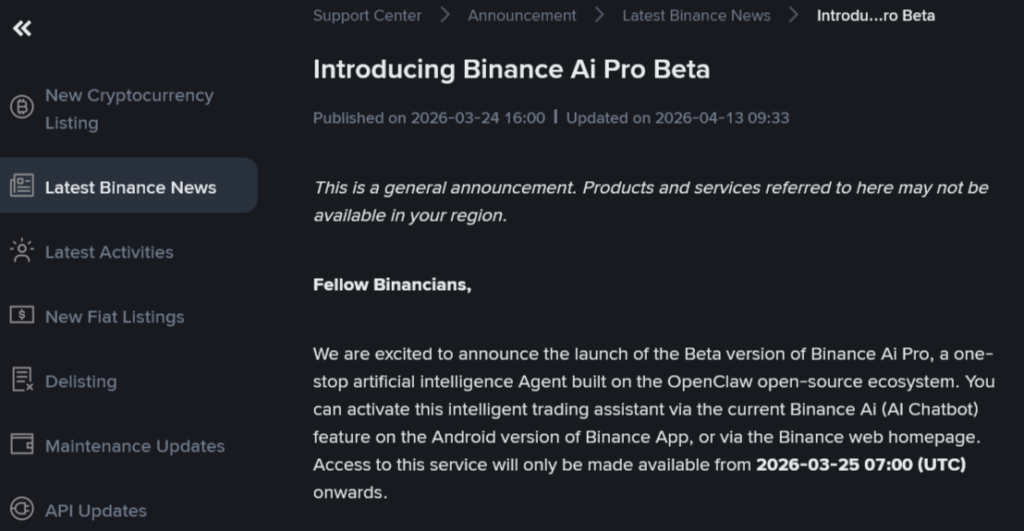
I transferred 30 USDT from my main account into this AI sub-account to test it. The AI immediately began analysing my holdings, asking about my risk tolerance through a brief questionnaire, and presenting strategy options.
What the AI actually does: it monitors market conditions, analyses price action using indicators like RSI, MACD, and Bollinger Bands, identifies trade setups matching your configured strategy, and executes orders on your behalf. You can ask it questions in plain language — “what is happening with BTC right now” or “should I increase my ETH position?” — and it gives reasoned responses drawing on live market data.
Over my test period, the AI made eight trades on my behalf within the configured parameters. Six were profitable, two ended at a small loss. My 30 USDT account ended the period at approximately 33.20 USDT — a reasonable result for a beta product, though obviously not a meaningful sample size for drawing conclusions about long-term performance.
The pricing is $9.99 per month during beta (regular price will be $29.99), with a 7-day free trial for first-time users. You get 5 million monthly AI credits, and the system continues operating at reduced capability even if you exhaust your credits before month-end.
My honest assessment of AI Pro: It is genuinely impressive as a beta product. The natural language interface works well. The isolated sub-account structure is smart risk management. But it is infrastructure — it executes your configured strategy, it does not divine profitable trades from nothing. If your strategy is unsound, the AI will execute it unsoundly but efficiently. Think of it as a very capable automation layer, not an oracle.
| AI Pro Feature | Details |
|---|---|
| Launch Date | March 25, 2026 (public beta) |
| AI Engines | ChatGPT, Claude, Qwen, MiniMax, Kimi |
| Account Structure | Dedicated isolated sub-account; no withdrawal permissions |
| Supported Actions | Spot orders, perpetual contracts, leveraged borrowing, market analysis, on-chain queries |
| Beta Pricing | $9.99/month; 7-day free trial; auto-renewal via Binance Pay |
| Standard Pricing | $29.99/month |
| Monthly Credits | 5 million (reduced mode when exhausted, not cut off) |
| Ecosystem | Built on OpenClaw open-source framework |
| Responsibility | User sets strategy parameters; Binance AI Pro provides execution infrastructure only |
The Withdrawal Test: Getting Money Back Out
I want to talk about this because withdrawal friction is one of the most common complaints I had seen before testing Binance myself. I wanted to know if it was warranted.
I tested two types of withdrawal: crypto withdrawal (sending USDT to an external wallet) and fiat withdrawal (converting USDT back to INR via P2P).
Crypto withdrawal: I sent 10 USDT to my MetaMask wallet on the BNB Smart Chain network. The process: Wallet → Withdraw → Select USDT → Enter wallet address → Select network (BSC) → Enter amount → Confirm with 2FA code. The network fee was $0.30 (far cheaper than withdrawing on Ethereum mainnet, which would cost $2–5). The USDT arrived in my MetaMask within 2 minutes. Clean, fast, no issues.
INR withdrawal via P2P: This is where things require more patience. To get money back to my bank, I had to list a sell order on Binance P2P, wait for a buyer to match with me, complete the transaction, and then receive INR in my bank account from the buyer. I listed a sell order for 20 USDT, priced at the going market rate. I had my first buyer match within 8 minutes. The buyer paid me via UPI, I confirmed receipt in my bank app, released the USDT from escrow, and the INR was in my account. Total time from listing to having INR in my bank: about 18 minutes.
The 2FA requirement on every withdrawal is worth highlighting. Binance asks for your authenticator code every time you withdraw — no exceptions. Initially this felt like friction. After thinking about it, I am glad it is there. If someone had my password, they still could not withdraw without my physical phone. Do not skip 2FA setup.
Security Features I Set Up (And Why You Should Too)
After going through the platform thoroughly, here is the security setup I would recommend for every user — and what I personally configured on my account:
| Security Feature | Where to Find It | Why It Matters | Did I Enable It? |
|---|---|---|---|
| Two-Factor Authentication (2FA) | Profile → Security | Blocks account access even if password is stolen | Yes — first thing I set up |
| Anti-Phishing Code | Profile → Security → Anti-Phishing Code | Your custom code appears on all legitimate Binance emails — fake emails won’t have it | Yes |
| Withdrawal Address Whitelist | Profile → Security → Whitelist | Withdrawals only go to pre-approved wallet addresses — stops thieves even if they access your account | Yes |
| Device Management | Profile → Security → Devices | See every device logged in; remove any you don’t recognise | Yes — removed 1 old device I had forgotten about |
| Passkey (Hardware key) | Profile → Security → Passkeys | Stronger than SMS 2FA; uses your phone’s biometric system | Yes — recommended over SMS |
The SAFU Fund is also worth understanding. It stands for Secure Asset Fund for Users and holds over $1 billion in USDC as of September 2025. It has been used twice in Binance’s history — after a 2019 hack and a 2022 bridge exploit — and covered all user losses both times. The fund is not government-insured, but the precedent of being made whole is meaningful. Binance funds 10% of all trading fees into SAFU continuously.
Full Fee Breakdown: What I Actually Paid
I tracked every fee I paid during my 90-day test. Here is the complete breakdown with real numbers:
| Transaction | Fee I Paid | Notes |
|---|---|---|
| P2P purchase (INR to USDT) | ~1.2% above market rate | This is the seller’s premium, not a Binance fee |
| Spot trade — market order (ETH/USDT) | 0.10% of trade value | Standard taker fee |
| Spot trade — limit order | 0.10% of trade value | Would be 0.075% if I had paid in BNB |
| USDT withdrawal (BSC network) | $0.29 flat | BSC is cheapest; ETH would be $2–5 |
| Simple Earn subscription | Free to subscribe | Binance takes its cut from the APY offered |
| P2P sell (USDT back to INR) | Free as buyer-matched | Some seller pairs have small fee; check per listing |
| Binance AI Pro (beta) | $9.99/month | 7-day free trial; I tested during trial period |
| Copy Trading | Commission on profits to Lead Trader | Typically 5–10% of your gains; no fee on losses |
The industry-weighted average trading fee across all major exchanges is approximately 0.80%. Binance’s 0.10% base rate is 8 times cheaper. If you hold BNB and use it to pay fees, that drops further to 0.075%. For reference, Coinbase Advanced charges 0.40–0.60% for regular users — four to six times more expensive than Binance for the same trades.
Other Fees
Spot Trading Fees
| User Tier | 30-Day Volume | Maker Fee | Taker Fee | With BNB (25% off) |
|---|---|---|---|---|
| Regular | Under $1 million | 0.100% | 0.100% | 0.075% maker/taker |
| VIP 1 | $1M – $5M | 0.090% | 0.100% | Lower with BNB |
| VIP 2 | $5M – $15M | 0.080% | 0.090% | Lower with BNB |
| VIP 9 | $4 billion+ | 0.012% | 0.024% | Even lower with BNB |
Zero-fee trading: Binance offers zero maker/taker fees on select BTC and FDUSD spot pairs. These pairs change periodically — check the fee schedule page for the current list.
Futures Trading Fees
| Contract Type | Maker Fee (Base) | Taker Fee (Base) | Notes |
|---|---|---|---|
| USDT-Margined Perpetuals | 0.020% | 0.050% | Reduces significantly at VIP tiers |
| Coin-Margined Perpetuals | 0.010% | 0.050% | Settled in underlying crypto |
| Quarterly Futures | 0.010% | 0.050% | Delivery at contract expiry |
Deposits & Withdrawals
| Transaction Type | Fee | Notes |
|---|---|---|
| Crypto Deposit | Free | Only network fees from your sending wallet apply |
| Fiat Deposit (Bank Transfer) | Free or minimal | Varies by country and banking partner |
| Fiat Deposit (Credit/Debit Card) | 2% | Same for Apple Pay and Google Pay |
| Crypto Withdrawal | Variable | Depends on token and network; ETH withdrawal is higher than BNB BSC |
| Fiat Withdrawal | Variable | Depends on region and payment method |
Binance 2026: The Numbers That Matter
| Metric | Figure | Period |
|---|---|---|
| Registered Users | 300 million+ | End of 2025 |
| Total Volume Traded | $34 trillion | Full year 2025 |
| Q1 2026 Crypto Market Volume | $20.57 trillion | Binance leads; April 2026 |
| Daily Spot + Futures Volume | ~$217 billion | June 2025 |
| Global CEX Market Share | ~40% | Q2–Q4 2025 |
| Cryptocurrencies Listed | 500+ | May 2026 |
| Trading Pairs | 1,500+ | May 2026 |
| BSC Daily Transactions | 8.9 million | 2025 |
| Binance Pay Merchants | 20 million+ | 2025 |
| Earn Rewards Distributed | $1.2 billion | Full year 2025 |
| Fraud Blocked | $6.69 billion | 2025 — 5.4M users protected |
| Law Enforcement Requests Processed | 71,000+ | 2025 |
| SAFU Fund | $1 billion+ USDC | Sept 2025 |
| MGX Investment | $2 billion | Early 2026 |
| Illicit Fund Exposure Reduction | 96% reduction since 2023 | 2025 |
| Institutional Volume Growth | +21% YoY | 2025 |
| Binance Alpha Users | 17 million | 2025 |
| Binance Alpha Volume | $1 trillion+ | 2025 |
Every Binance Product Explained
Binance is no longer just an exchange. Here is a complete map of the ecosystem as it stands in 2026:
Trading Products
| Product | What It Does | Max Leverage | Best For |
|---|---|---|---|
| Spot Trading | Buy/sell 500+ cryptocurrencies at live market prices | None (1x) | All users, long-term holders |
| Margin Trading | Borrow funds to amplify your position on spot markets | Up to 10x | Experienced traders |
| Futures (USDT-margined) | Perpetual and quarterly contracts settled in USDT | Up to 125x | Professional traders |
| Futures (Coin-margined) | Perpetual contracts settled in the underlying crypto | Up to 125x | Advanced traders, hedgers |
| Options | European-style options on BTC and ETH | Defined by contract | Professional traders |
| Copy Trading | Mirror positions of verified Lead Traders automatically | Follows lead’s settings | Beginners, passive traders |
| Trading Bots | Automated grid, DCA, and arbitrage strategies | Strategy dependent | Systematic traders |
| Binance AI Pro (Beta) | AI-agentic trading infrastructure; automates workflows | User-defined | All levels, launched March 2026 |
Earn & Income Products
| Product | How It Works | Liquidity |
|---|---|---|
| Simple Earn (Flexible) | Earn interest on idle crypto; withdraw any time | Instant |
| Simple Earn (Locked) | Lock crypto for fixed term in exchange for higher APY | Fixed period |
| Staking | Delegate proof-of-stake assets to earn network rewards | Varies by asset |
| Dual Investment | Structured product — earn high APY but accept price risk at settlement | Fixed period |
| Auto-Invest | Dollar-cost averaging on a schedule into chosen assets | Ongoing |
| Liquidity Farming | Provide liquidity to trading pairs and earn fees | Variable |
Web3 & Ecosystem Products
| Product | What It Does |
|---|---|
| Binance Wallet | Non-custodial Web3 wallet integrated into the app; supports 100+ dApps and cross-chain swaps |
| Binance Alpha | Early-stage token discovery and trading; 17M users, $1T+ volume in 2025 |
| Binance Smart Chain (BSC) | Binance’s own Layer 1 blockchain; 8.9M daily transactions, home to PancakeSwap and hundreds of DeFi dApps |
| Binance NFT | Marketplace for minting, buying, and selling NFTs |
| Binance Launchpad | Token sale platform for new crypto projects; early access for BNB holders |
| Binance Launchpool | Stake BNB or FDUSD to farm new tokens before they list |
Payments, Social & Education
| Product | What It Does |
|---|---|
| Binance Pay | Crypto payments at 20M+ merchants globally; 30% user growth in 2025 |
| Binance Card | Visa debit card that spends crypto at any card-accepting merchant |
| Binance P2P | Peer-to-peer marketplace; buy and sell crypto with local fiat including INR, BDT, NGN, and 100+ currencies |
| Binance Square | Social feed for crypto news, analysis, and community discussion (formerly Binance Feed) |
| Binance Academy | Free educational content covering blockchain basics through advanced trading |
| Binance Research | Professional-grade market reports and asset analyses |
Institutional Products
| Product | What It Does |
|---|---|
| OTC Trading | Block trades for large orders with minimal slippage; $210% growth in fiat OTC volume in 2025 |
| Binance Wealth | Managed strategies and dedicated relationship management for HNW clients |
| Fund Accounts | Entity-level account structures for funds and asset managers |
| Binance Prestige | White-glove service tier with dedicated support and exclusive access |
| Crypto-as-a-Service | White-label rails that allow regulated firms to offer crypto products without building exchange infrastructure |
Three Things That Genuinely Frustrated Me
I am not writing a press release, so I want to be honest about the points where Binance genuinely irritated me during my 90-day test.
Problem 1: Customer support is bad. I submitted one support ticket during my test — a question about why a P2P trade was taking longer than expected (it resolved on its own before support responded). The initial response was a chatbot that gave me three generic links to help articles. It took 11 hours to reach a human, and their response, while technically accurate, repeated information I had already found myself. TrustPilot users rate Binance at approximately 1.4/5 stars, with slow support being the dominant complaint. If you have a genuine problem — a stuck withdrawal, a suspicious login, a dispute — you need to be prepared to wait and to be persistent. This is the single biggest gap between Binance and competitors like Coinbase or Kraken, both of which have significantly better support response times.
Problem 2: The interface is genuinely intimidating at first. I had some prior experience with trading platforms, and I still spent the first week feeling slightly lost. A complete beginner would likely be overwhelmed. The number of products, sub-menus, banners, and market tickers on the homepage is genuinely excessive. Binance knows this — hence Lite Mode — but even Lite Mode requires you to know that it exists. The onboarding experience does not guide new users to it proactively enough.
Problem 3: P2P is not instant cash in, instant cash out. It works, but it requires finding a suitable seller/buyer, waiting for them to confirm, making the payment, and waiting for release. For users coming from Indian exchanges like CoinDCX or WazirX where direct INR deposits are available, the P2P process feels clunky by comparison. It is worth it for Binance’s fee advantage and asset selection, but the friction is real, especially if you want to move money quickly.
How Binance Stacks Up Against the Competition
| Feature | Binance | Coinbase | OKX | Kraken | CoinDCX (India) |
|---|---|---|---|---|---|
| Spot Fee (Base) | 0.10% | 0.40–0.60% | 0.10% | 0.25% | 0.10% |
| Daily Volume | ~$217B | ~$1.9B | ~$2.2B | ~$800M | Domestic only |
| Coins Listed | 500+ | ~260 | 350+ | ~250 | ~200 |
| INR Direct Deposit | No (P2P only) | No | P2P | No | Yes (UPI/IMPS) |
| AI Trading Tool | Yes — AI Pro (2026) | No | Limited | No | No |
| Futures Max Leverage | 125x | Limited | 100x | 50x | No futures |
| Customer Support Quality | Below average | Good | Average | Good | Good for India |
| Regulatory Standing (India) | FIU-IND registered | Not India-specific | FIU-IND registered | Not India-specific | Fully Indian-regulated |
| SAFU / Insurance Fund | $1B+ SAFU | FDIC ($250K limit) | Risk fund | No specific fund | Insurance partial |
My overall take on competitors: If you want the most assets, the lowest fees, the deepest liquidity, and the most advanced products globally, Binance wins clearly. If you want the simplest possible experience and are US-based, Coinbase is better. If you are Indian and want direct INR deposits without P2P hassle, CoinDCX is more convenient for that specific purpose — though Binance’s asset selection and fees are better once you are inside the platform.
Who Should Use Binance?
| User Type | Verdict | Reason |
|---|---|---|
| Active spot trader (non-US) | Best choice | Lowest fees, deepest liquidity, most pairs |
| Futures / derivatives trader | Best choice | Highest volume, lowest fees, most contract types |
| Passive income seeker | Excellent choice | $1.2B distributed in 2025; extensive Earn products |
| DeFi / Web3 user | Excellent choice | Binance Wallet, BSC, Alpha ecosystem |
| Indian retail investor | Excellent choice | INR P2P, wide selection, competitive fees |
| Institutional / large capital | Strong choice | Deep OTC liquidity, Fund Accounts, $2B MGX backing |
| Complete beginner | Good with caveats | Use Lite mode and Copy Trading; support is limited |
| US-based user | Use Binance.US or Coinbase | Global platform restricted; Binance.US lacks key features |
Binance supported vs. non-supported (restricted) countries
Binance operates in 100+ countries, but availability depends on local regulations and features may vary.
| Region | Supported Countries (Examples) |
|---|---|
| Asia-Pacific | India, Pakistan, Philippines, Vietnam, Taiwan, Cambodia, Mongolia |
| Europe | France, Italy, Spain, Portugal, Poland, Switzerland, Turkey, Ukraine |
| Americas | Argentina, Brazil, Mexico, Chile, Colombia, Peru |
| Middle East | UAE, Saudi Arabia, Israel, Egypt |
| Africa | South Africa, Nigeria (limited/regulatory issues), Kenya |
Restricted / Non-Supported Countries
These are countries where Binance is fully banned or not allowed to operate due to legal/regulatory reasons.
| Region | Restricted Countries / Regions |
|---|---|
| North America | United States, Canada |
| Asia | North Korea |
| Middle East | Iran |
| Europe / Eurasia | Netherlands, Crimea, Donetsk, Luhansk |
| Caribbean / Americas | Cuba |
Specific Advice for Indian Users in 2026
India deserves its own section because the experience on Binance is meaningfully different here compared to users in Europe or the Gulf.
Registration status: Binance registered with India’s Financial Intelligence Unit (FIU-IND) in 2024 after a period where Indian authorities had blocked the platform. The registration normalised Binance’s standing in India and it has operated without regulatory disruption since. Always check the current status before opening an account, as regulations in India evolve.
Getting money in and out: Use P2P with UPI or IMPS. There is no cleaner route currently. When buying, choose sellers with 98%+ completion rate, 500+ trades, and a verified merchant badge. When selling, be patient — you may wait 5–20 minutes for a suitable buyer. Always confirm INR receipt in your bank before releasing crypto. Keep a screenshot of every P2P transaction.
Indian tax obligations — this is critical: Every crypto transaction is a taxable event in India. The rules as of 2026:
| Tax Rule | Detail |
|---|---|
| Tax rate on crypto gains | Flat 30% on all profits — no exemptions, no slabs |
| TDS on transactions | 1% TDS deducted on each sale above ₹10,000 (₹50,000 for specified persons) |
| Loss set-off | NOT allowed — crypto losses cannot offset other income |
| Loss carry-forward | NOT allowed in the same category |
| Earn / staking rewards | Taxable as income at 30% in the year received |
| P2P transactions | Each P2P purchase and sale is a taxable event; keep detailed records |
| Record keeping | Binance provides a transaction history export; use tools like KoinX or ClearTax for filing |
Practical recommendation for Indian users: Download your transaction history from Binance regularly (Wallet → Transaction History → Export). Use a crypto tax tool compatible with Indian law (KoinX integrates directly with Binance). Do not wait until March to start organising your records — the 30% flat tax on gains applies regardless of how much or how little you traded.
What Is New in 2026: AI Pro, MGX & the Road to 3 Billion Users
If 2025 was the year Binance cleaned up its regulatory house, 2026 is the year it is redefining what a crypto exchange actually does. Three developments stand out.
Binance AI Pro: Trading Gets an Agentic Upgrade
On March 25, 2026, Binance launched the public beta of Binance AI Pro — its most ambitious product launch since the original exchange went live. This is not a simple chatbot or a chart overlay. Binance AI Pro is an agentic trading infrastructure built on the OpenClaw open-source ecosystem, powered by multiple AI engines including ChatGPT, Claude, Qwen, MiniMax, and Kimi.
What does that mean in practice? Users activate it with a single click from the Binance homepage or Android app. The system automatically creates a dedicated virtual sub-account, isolated from the main account, with its own API key that has zero withdrawal or transfer permissions. You manually move funds into this sub-account. The AI then handles strategy configuration, market analysis, execution, position monitoring, and risk management — while you stay in control of the overall parameters.
Binance AI Pro can handle spot and perpetual contract orders, leveraged borrowing, on-chain wallet queries, and custom strategy deployment. The beta is priced at $9.99 per month (regular price will be $29.99), with a 7-day free trial for new users. Each subscription includes 5 million monthly AI credits.
Critically, Binance has been careful to frame this as infrastructure support, not advice. The AI executes; the strategy and risk settings remain the user’s responsibility. This is a smart compliance position — and one that distinguishes Binance AI Pro from the many AI trading tools that make speculative return promises.
The $2 Billion MGX Investment
Abu Dhabi’s MGX — a state-linked technology investment firm focused on artificial intelligence — injected $2 billion into Binance in early 2026. This was the first institutional investment Binance has ever received, and it was paid entirely in stablecoins, making it a landmark in institutional crypto finance. MGX’s stated goal is to enable innovation at the intersection of AI, blockchain, and finance. The investment validates both Binance’s regulatory rehabilitation and the growing institutional appetite for regulated crypto infrastructure.
The Road to 3 Billion Users
In an April 2026 blog post, Binance laid out its long-term vision in unusually direct terms: the next billion users will not come from trading alone. They will arrive through payments, yield products, tokenised real-world assets, AI-driven discovery, and community-led platforms. Binance CEO Richard Teng pointed to a global crypto user base of approximately 741 million in 2025, with weekly app usage nearly tripling since 2023. The company’s stated ambition is 3 billion users — a goal that implies Binance becoming financial infrastructure for a significant fraction of the global population, not just a trading terminal for crypto enthusiasts.
The platform’s architecture is already reflecting this shift. Stablecoin supply has exceeded $320 billion globally. Monthly on-chain volume has reached $7.2 trillion. Tokenised real-world assets have passed $25 billion. Binance is positioning itself at the centre of all of it.
Frequently Asked Questions
Is Binance legal in India in 2026?
Yes. Binance is registered with India’s Financial Intelligence Unit (FIU-IND) since 2024. Indian residents can legally create accounts and trade. All gains must be declared and are taxed at 30% under Indian law.
What is the minimum deposit on Binance?
There is no formal minimum deposit. In practice, P2P sellers typically have minimum order sizes — often ₹500 to ₹2,000. For crypto deposits, there is a minimum transfer amount that varies by token (usually around $10–$20 equivalent to avoid getting stuck with an amount too small to trade or withdraw).
Is Binance safe in 2026?
Safer than it has ever been. Binance holds regulatory licences in multiple jurisdictions, maintains a $1 billion+ SAFU insurance fund, reduced illicit fund exposure by 96%, and received a $2 billion institutional investment from Abu Dhabi’s MGX in 2026. It is not government-insured like a bank, but the security infrastructure is serious and battle-tested. Enable 2FA and the withdrawal whitelist and your account risk is very low.
What happened to CZ and who runs Binance now?
Changpeng Zhao (CZ) stepped down as CEO in November 2023 after pleading guilty to US AML charges and was replaced by Richard Teng — a Singaporean regulatory expert and former head of ADGM. CZ served a four-month sentence and has since stepped back from day-to-day operations. Richard Teng has led a significant compliance turnaround. CZ is writing a book called “Freedom of Money,” scheduled for publication in mid-2026.
What is BNB and do I need it?
BNB is Binance’s native token. Holding BNB reduces your trading fees by 25% (from 0.10% to 0.075%). It also powers the BNB Smart Chain, grants access to Launchpad token sales, and is used as gas for BSC transactions. You do not need BNB to trade, but for regular users the fee savings justify holding a small amount. BNB trades around $614 as of May 2026.
What is Binance Alpha and is it worth trying?
Binance Alpha is an early-stage token discovery platform where new projects trade before their full Binance listing. It had 17 million users and $1 trillion in volume in 2025. It can offer significant upside on early entries — but also significant losses on projects that fail to gain traction. For experienced users comfortable with high-volatility, speculative tokens, it is worth exploring. For beginners, stick to main spot trading first.
Can I use Binance without completing KYC?
No. As of 2026, Binance requires at minimum “Verified” status (government ID + liveness check) before you can trade, deposit, or withdraw. Unverified accounts can view the platform but cannot execute any transactions.
How do I avoid P2P scams on Binance?
Three rules I follow personally: (1) Only trade with merchants who have 98%+ completion rate and 500+ completed trades. (2) Always verify that the payment sender name in your bank matches the P2P buyer’s name exactly — if they do not match, open a dispute immediately and do not release crypto. (3) Never release crypto from escrow before you have confirmed the INR has actually arrived in your bank account, not just a screenshot the buyer sends you.
What is the Binance SAFU fund?
The Secure Asset Fund for Users — established 2018, funded by 10% of all Binance trading fees. Holds $1 billion+ in USDC. Has been used to make users whole after both the 2019 exchange hack and the 2022 BSC bridge exploit. Not government-backed, but has a clear track record of covering losses when they have occurred.
My Final Verdict After 90 Days
I went into this test trying to form an honest, experience-based opinion rather than repeating what everyone else says. Here is where I landed.
Binance is the right platform for you if: you trade seriously and want the lowest possible fees; you want access to assets that are simply not available on Indian exchanges; you want to explore DeFi, AI-driven trading, or early-stage token discovery; you are building a portfolio that goes beyond BTC and ETH into the broader crypto ecosystem.
Binance is the wrong platform for you if: you are a complete beginner who needs hand-holding and responsive support; you are based in the US; you want direct INR bank integration without the P2P step; or you need the psychological comfort of government-backed deposit insurance.
The platform I used for 90 days worked. The trades executed instantly. The KYC was completed in hours. The P2P deposits and withdrawals functioned reliably. The Earn products paid what they promised. The AI Pro beta was genuinely interesting. I did not lose money to a hack or scam. I lost some money on trades that went against me — which is my fault, not Binance’s.
The customer support weakness is real and should not be minimised. If you ever find yourself in a dispute or a stuck transaction, Binance’s support will be a frustrating experience. This is the platform’s most significant unresolved problem, and it has been for years.
After 90 days of real use, my conclusion is this: for a serious crypto user outside the United States — particularly in India, the Middle East, Southeast Asia, and Africa — Binance remains the single most capable and cost-efficient crypto platform available. The 2023 legal chaos is behind it. The compliance infrastructure is real. The product development in 2026 is genuinely exciting. The fees are still unbeatable.
Use it carefully, set up all the security features on day one, do not keep funds on the exchange that you are not actively managing, and stay informed about your Indian tax obligations. If you do those things, Binance does what it promises — and it promises quite a lot.
Quick Scorecard
| Category | Score | My Take |
|---|---|---|
| Trading Fees | ★★★★★ | Best in class — 0.10% base, reducible with BNB |
| Asset Selection | ★★★★★ | 500+ coins — nothing comes close |
| Liquidity & Execution Speed | ★★★★★ | Instant fills, no slippage on small orders |
| Security Features | ★★★★½ | Strong infrastructure; SAFU fund works |
| Ease of Use | ★★★☆☆ | Powerful but genuinely intimidating at first |
| Customer Support | ★★☆☆☆ | Chatbot-heavy; slow human response — real problem |
| INR On/Off Ramps | ★★★★☆ | P2P works well; just not as seamless as direct bank |
| Product Ecosystem | ★★★★★ | Most comprehensive in the industry by a wide margin |
| Innovation (AI Pro, Alpha) | ★★★★★ | Leading the field in 2026 |
| Regulatory Standing | ★★★★☆ | Genuine improvement; ADGM licence is milestone |
| Overall | ★★★★☆ | Best global exchange for most non-US users |
About this review: This article is based on 90 days of direct personal use of Binance, including account creation, KYC, P2P deposits, spot trading, Copy Trading, Simple Earn, Binance AI Pro beta testing, and P2P withdrawals. Data figures are sourced from Binance’s official 2025 End-of-Year Report, Binance AI Pro launch documentation (March 2026), Binance’s April 2026 blog post on the path to 3 billion users, CoinMarketCap exchange statistics, and Richard Teng’s public statements.
Disclosure: This article is produced for informational and educational purposes only. It does not constitute financial advice or an endorsement of Binance or any cryptocurrency. Cryptocurrency trading involves substantial risk of loss — you may lose some or all of your capital. All figures were accurate at time of writing (May 2026). Tax rules cited are based on the Indian Finance Act 2022 — always verify with a qualified chartered accountant before filing. Conduct your own research before making any investment decision.

